
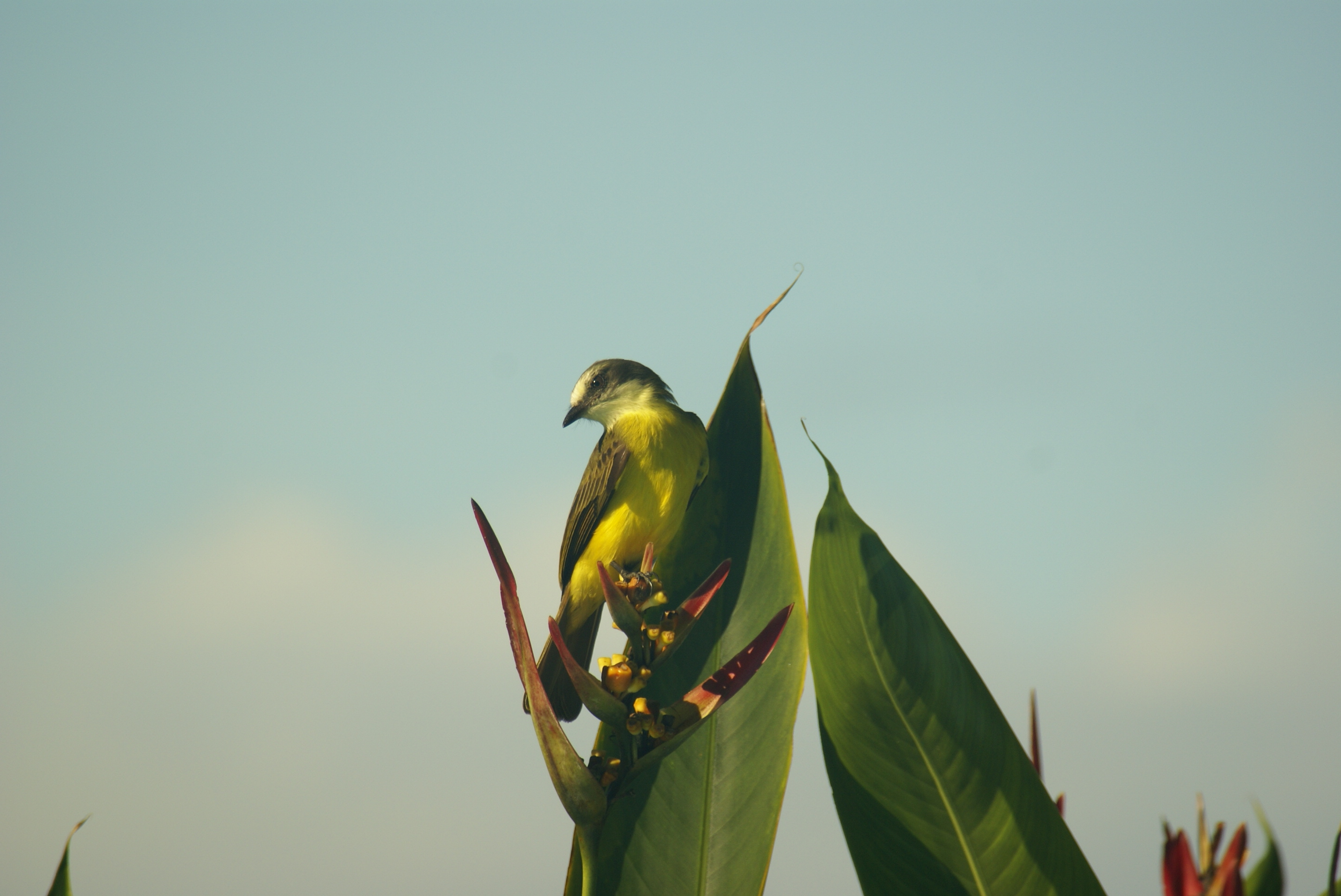
Costa Rica is home to more than 900 species of birds — roughly the same number as the entire United States and Canada combined. The Southern Pacific coast, where Vista Bendita sits above Ojochal, is one of the most bird-rich corridors in the country. Corcovado National Park, the Terraba-Sierpe wetlands, the Marino Ballena coastline, and the mountain forests between them create a stacked ecosystem that supports species found almost nowhere else on earth.
You don’t need to go anywhere to experience it. Sixty-eight species have been confirmed at Vista Bendita itself.
Birding at Vista Bendita — The Property List
Most vacation rental listings in Costa Rica mention scarlet macaws. We’re going to be honest with you: we haven’t logged one at Vista Bendita yet. They’re in the region — you’ll see them on the road toward Uvita — but we’re not going to claim something we haven’t confirmed on the property.
What we have confirmed is 68 species, logged with the Merlin Bird ID app directly at Vista Bendita between November 2024 and January 2026. No guided tours. No driving to a national park. Just coffee on the terrace, binoculars, and a phone.
Two Trogons on the Same Property
Trogons are among the most sought-after birds in the neotropics — jewel-colored, elusive, and genuinely hard to find. We have two species confirmed at Vista Bendita.
The Gartered Violaceous Trogon — yellow belly, violet-blue head, barred black-and-white tail — was first logged in November 2024. The Slaty-tailed Trogon, a larger species with a vivid orange-red belly and slate-gray wings, appeared in May 2025. Both were spotted in the forest canopy around the property without any effort beyond looking up.
For context: many birders travel to Costa Rica specifically to find a single trogon species. You might find two before breakfast.
Raptors
Vista Bendita’s hillside position puts you at eye level with the forest canopy — excellent raptor-watching territory. Confirmed species include:
Collared Forest-Falcon — a secretive, powerful forest predator more often heard than seen. Logging one is a genuine rarity for most birders.
Laughing Falcon — named for its distinctive ha-ha-ha call, this snake-specialist is one of the most charismatic raptors in Central America.
Bat Falcon — a compact aerial hunter that targets bats and swallows at dusk. Watching one work the tree line at sunset is something you don’t forget.
Roadside Hawk and Yellow-headed Caracara round out a raptor list that would make serious birders take notice.
The Antbird Contingent
Antbirds, antshrikes, antwrens, and anthrushes are the specialist birds of deep rainforest. Having multiple species confirmed on a single property is a reliable indicator of intact, high-quality forest habitat.
At Vista Bendita we’ve logged: Black-hooded Antshrike, Barred Antshrike, Great Antshrike, Chestnut-backed Antbird, Dot-winged Antwren, Black-faced Antthrush, and Long-billed Gnatwren — seven species in this family alone.
If you know what that means, you’re already mentally packing your binoculars. If you don’t — it means the forest here is the real thing.
The Motmot: Our Unofficial Mascot
The Lesson’s Motmot is one of those birds that stops people cold the first time they see it. Turquoise-green head, rufous belly, and that impossibly long racket-tipped tail that swings like a pendulum while the bird sits perfectly still.
Motmots are not uncommon in Costa Rica, but they’re not birds you stumble across everywhere either. We have one confirmed at Vista Bendita, and it tends to favor the shaded middle canopy around the pool terrace in the early morning. Sit quietly with your coffee. It’ll show up.
Hummingbirds — Three Species and Counting
- Rufous-tailed Hummingbird — the most common in the region, but no less dazzling for it.
- Blue-throated Goldentail — emerald-green with an iridescent gold tail and brilliant blue throat. Genuinely stunning.
- Stripe-throated Hermit — a forest hummingbird, longer-billed, haunting the shadier understory.
Other Notable Species
Montezuma Oropendola — crow-sized, chestnut body, yellow-tipped tail, a call that sounds like water gurgling down a drain. They nest colonially in hanging basket nests and are one of the most visually dramatic birds in the region.
White-necked Puffbird — rotund, contemplative, and somehow both comical and regal.
Crested Guan — a large turkey-like bird that moves through the canopy in small groups. When one lands near you, you feel it.
Prothonotary Warbler — a North American migrant that winters in Central America. Blazing golden-yellow, the kind of bird that makes American birders lose their composure.
Amazon Kingfisher — the largest kingfisher in the Americas, logged at Vista Bendita in May 2025.
Green Shrike-Vireo — brilliant green, yellow throat, almost impossibly difficult to spot despite its color. You’ll hear it before you see it, and you may never see it.
The Full Confirmed List — Vista Bendita
68 species · November 2024 – January 2026 · Logged via Merlin Bird ID
Gartered Violaceous Trogon · Slaty-tailed Trogon · Bright-rumped Attila · Common Squirrel-Cuckoo · Mealy Amazon · Red-lored Amazon · Yellow-throated Toucan · Tropical Kingbird · Common Tody-Flycatcher · Great Kiskadee · Rufous-tailed Hummingbird · Social Flycatcher · Golden-hooded Tanager · Black-hooded Antshrike · Amazon Kingfisher · Piratic Flycatcher · Masked Tityra · Long-billed Gnatwren · Blue Ground Dove · Lesser Greenlet · Blue-black Grassquit · Scarlet-rumped Tanager · Orange-chinned Parakeet · Boat-billed Flycatcher · White-tipped Dove · Bananaquit · Chestnut-backed Antbird · Southern House Wren · Rufous-breasted Wren · Barred Antshrike · Clay-colored Thrush · Gray-capped Flycatcher · Buff-throated Saltator · Streak-headed Woodcreeper · Great-tailed Grackle · Gray-headed Chachalaca · Collared Forest-Falcon · Laughing Falcon · Black-bellied Wren · Gray-cowled Wood-Rail · Northern Plain-Xenops · Cocoa Woodcreeper · Blue-black Grosbeak · Great Antshrike · Crested Guan · Riverside Wren · Black-faced Antthrush · Dot-winged Antwren · Lesson’s Motmot · Bat Falcon · Chestnut-sided Warbler · Blue-gray Tanager · Prothonotary Warbler · Blue-throated Goldentail · Dusky-capped Flycatcher · White-crowned Parrot · Palm Tanager · White-necked Puffbird · Melodious Blackbird · Roadside Hawk · Yellow-olive Flatbill · Stripe-throated Hermit · Green Shrike-Vireo · Montezuma Oropendola · Red-crowned Woodpecker · Scarlet-rumped Cacique · Southern Beardless-Tyrannulet · Yellow-headed Caracara
The Scarlet Macaw
We’d be remiss not to mention them. Scarlet macaws are present in the Ojochal region — you’ll almost certainly see them on the road toward Uvita or Marino Ballena — but we haven’t confirmed one directly at Vista Bendita yet. We’re working on it. The list is still growing. When it happens, this post gets updated.
How to Bird at Vista Bendita
Best hours: 5:30–8:30AM and 4:30–6:30PM. The terrace and pool area are prime spots. The forest edge behind the property is where the antbirds work.
Download Merlin Bird ID before you arrive — it’s free from Cornell Lab of Ornithology. Download the Costa Rica bird pack in the app while you have WiFi. It identifies birds by sound in real time, which means you can sit quietly on the terrace and let the app log what it hears.
Bring binoculars. Even a basic pair at $40–60 transforms the experience. The motmot, trogons, and raptors are all canopy birds — you’ll get partial views without binoculars and full views with them.
Walk the access road slowly early in the morning. The switchback road leading up to Vista Bendita passes through secondary forest and is one of the most productive birding spots on the property. Sloths are also regularly spotted in the trees along this stretch.
Guided Birding Tours Near Vista Bendita
⭐ Walter Sanchez — Drake Bay Birdwatching
Website · Email: walter@drakebaybirdwatching.com
The premier birding guide for the Southern Pacific and Osa Peninsula region. Walter Sanchez is a resident certified birding and naturalist guide with over 10 years of experience in ecotourism, fully insured and certified by the Costa Rican Tourism Institute (ICT). He specializes in the Drake Bay, Ojochal-Uvita, and Sierpe areas and offers tailor-made packages for all levels — from birdwatching groups and nature lovers to photographers, families, and student groups. Burials & Beyond
What makes Walter exceptional: while leading a birding tour near Ojochal in 2022, Walter discovered the Crimson-backed Tanager — a new bird species record for all of Costa Rica. That is the definition of local expertise. Reviewers describe him as incredibly knowledgeable, able to identify a massive variety of birds by sound and by sight, and a sensitive and caring guide who ensures everyone in the group has an extraordinary experience. BooksFactNeperos
Tours include: early morning birding walks, Corcovado National Park expeditions, Sierpe wetlands boat tours, whale watching, and custom multi-day packages around the Osa Peninsula. The early bird walk starts at 5:30AM and extends for about 3 hours through private gardens, forest edges, riversides, old and new growth forest, open areas, and shorelines. infobae
Best for: Serious birders, photographers, guests who want the most knowledgeable local guide available in the region.
Hacienda Barú — Birdwatching Tours
📍 Google Maps ~40 min north · Dominical · Website · Guided tour: $52/person · Self-guided: $15/person
Hacienda Barú has documented over 300 bird species on the property — scarlet macaws, trogons, motmots, raptors, and dozens of migratory species. The refuge sits in a key migration corridor and the professional guides here are among the best in the region. Ocean Conservation
The guided birdwatching tour departs at 6AM Monday through Saturday. After early morning jungle and its birds you arrive at the Hacienda Barú campsite for a typical Costa Rican breakfast, then hike through primary forest in search of trogons, motmots, antshrikes, manakins, tinamous, and curassows. Duration: 6 hours. Includes guide, admission, birdwatching tower, and breakfast. $52 per person. The self-guided trail pass ($15) gives you access to four trails covering primary forest, secondary forest, swamp forest, wetlands, and beach — easily 5+ hours of independent birding. Facebook
Best for: The most accessible serious birding experience near Vista Bendita. The 300-species list means experts will find target birds here that simply aren’t available elsewhere in the region.
Birding in Marino Ballena National Park
~25 min north · Uvita · $6 park entry
The forest trail connecting the Uvita entrance to the Whale’s Tail sandbar passes through active bird habitat. Scarlet macaws, herons, egrets, kingfishers, and shorebirds are all regularly spotted. Easy, accessible, and rewarding even for casual observers — pair a birding walk with a low-tide Whale’s Tail visit.
Best for: Casual birders, families, guests wanting to combine birding with a beach day.
Terraba-Sierpe Wetlands — Boat Birding
~45 min to Sierpe · Half or full day · Guided boat tour
A kayak or boat tour through the mangroves of Terraba searching for ospreys, scarlet macaws, green herons, blue herons, tiger herons, monkeys, agouti, caiman, and boas. Central America’s largest mangrove system by water is a completely different birding environment from the forest — waterbirds, raptors, and mangrove specialists you won’t find at Vista Bendita. The boat moves slowly and quietly through channels, which makes sightings extraordinary. Book with Walter Sanchez or through local Sierpe operators. trip
Best for: Waterbirds, herons, kingfishers, ospreys, mangrove specialists.
Corcovado National Park — The Epic List
~2–2.5 hrs via Drake Bay · Full day · Guided only
The most biodiverse national park on earth. Over 400 bird species documented — scarlet macaws, harpy eagles, four species of parrots, all four Costa Rican monkey species to provide canopy movement that flushes birds. Guides are mandatory. Walter Sanchez runs Corcovado birding expeditions from Drake Bay — the most direct access to the park from Vista Bendita. Book well in advance.
Best for: Serious birders targeting species not found elsewhere. A full-day expedition — plan nothing else.
Birding Seasons at Vista Bendita
The Southern Pacific has outstanding birding year-round, but different seasons bring different highlights.
November – April (Dry Season): North American migratory warblers, tanagers, and flycatchers are present — the Prothonotary Warbler and Chestnut-sided Warbler on our own list are both winter visitors from North America. Forest is drier and visibility is often better. Best conditions for photography.
May – October (Green Season): Breeding season for resident species, which means more activity, more song, and more territorial behavior. The jungle is lush and dramatic. The Slaty-tailed Trogon on our list was first confirmed in May. Insects peak in the rainy season, which drives insectivore activity — antbirds and flycatchers are particularly active.
Year-round: Trogons, motmots, raptors, antbirds, toucans, parrots, tanagers, and hummingbirds are all resident species. The list at Vista Bendita grows regardless of season.
Quick Reference — Birding Options
| Option | Drive | Cost | Best For |
| Vista Bendita terrace | 0 min | Free | Casual birding, 68 confirmed species |
| Vista Bendita access road | 0 min | Free | Early morning walk, sloths too |
| Marino Ballena NP | 25 min | $6 park | Shorebirds, macaws, casual birding |
| Hacienda Barú guided tour | 40 min | $52/person | 300+ species, expert guides ⭐ |
| Hacienda Barú self-guided | 40 min | $15/person | Independent birding, trails |
| Walter Sanchez — local tour | Varies | By arrangement | Best regional expert — personal rec ⭐ |
| Terraba-Sierpe boat | 45 min | Tour cost | Waterbirds, mangrove specialists |
| Corcovado NP | 2–2.5 hrs | $80+ | 400+ species — the epic list |
Tools & Resources
Merlin Bird ID (free — Cornell Lab of Ornithology) — Download before arriving. Install the Costa Rica bird pack. Use Sound ID on the terrace each morning and watch the list build. This is what we use for the Vista Bendita property list.
eBird (free — Cornell Lab of Ornithology) — The world’s largest birding database. Search “Ojochal” or “Marino Ballena” for recent sightings in the area. Useful for knowing what target species are currently being seen before you arrive.
Binoculars — Bring them. Any pair beats no pair. Nikon Prostaff 7S or similar mid-range binoculars (~$100–150) are ideal for jungle birding where light is variable.
Field Guide — The Birds of Costa Rica by Garrigues & Dean is the standard reference. The Merlin app covers most identification needs but having the book in the house adds depth.
Have you seen a species at Vista Bendita not on our list? Leave a comment — we update the count as sightings are confirmed.
Stay at Vista Bendita
After a day exploring waterfalls, beaches, whale watching tours, restaurants, and rainforest adventures, relax in the peaceful mountain setting of Vista Bendita overlooking Costa Rica’s South Pacific coast.
Enjoy ocean views, tropical wildlife, a private pool, and easy access to some of the region’s best experiences near Ojochal and Uvita.
More Details & Local Travel Tips
We’ve created a growing collection of travel guides, local recommendations, and insider tips to help you make the most of your stay at Vista Bendita and your time exploring Costa Rica’s South Pacific coast.
Browse our blog for information on:
- Restaurants and cafes in Ojochal & Uvita
- Beaches, waterfalls, and national parks
- Whale watching, snorkeling, and outdoor adventures
- Shopping, grocery stores, and local markets
- Travel tips, driving advice, and packing recommendations
- Wellness, relaxation, and hidden local gems
Whether you’re planning your itinerary or simply looking for inspiration after you arrive, our guides are designed to help you experience the region like a local.
Explore the Vista Bendita Travel Blog
Leave a Reply