
One of the most common questions we hear is some version of: “Is the rainy season really that bad?”
The honest answer — from people who have been at Vista Bendita in January, March, May, and November — is no. Not even close to bad. Different, yes. Worth understanding, absolutely. But the rainy season on the Southern Pacific coast of Costa Rica is one of the most misunderstood travel windows in Central America, and guests who avoid it are often missing the best version of this place.
This guide covers what to actually expect month by month, what changes and what doesn’t, and what events and celebrations are worth timing your trip around.
The Two Seasons — What They Actually Mean Here
Costa Rica has a dry season (verano) and a rainy season (invierno) — summer and winter in local terminology, though neither aligns with what those words mean in North America or Europe.
On the Southern Pacific coast — Dominical, Uvita, Ojochal, and the Osa Peninsula — the seasons are more pronounced than anywhere else in Costa Rica. This is the wettest part of the country, which is exactly why it’s also the most biodiverse and the most lush.
Dry Season: December – April Clear skies, lower humidity, calm seas, and the golden-hour sunsets that end up all over Instagram. This is peak season — more visitors, higher prices, advance booking required. The landscape gets progressively drier toward April, and by late dry season some of the green is gone from the hills.
Green Season: May – November Rain arrives — usually in the afternoons — and the jungle responds immediately. Everything turns an almost absurd shade of green. Waterfalls roar. Rivers run full. Wildlife activity peaks. Prices drop significantly. The coast empties of crowds. And the rain — which visitors worry about endlessly — typically follows a very predictable pattern that leaves mornings clear and beautiful.
The bottom line: there is no bad time to visit. There is only a question of what kind of experience you want.
Month by Month
January — ⭐ Peak Season
Weather: Dry, sunny, low humidity. Perfect beach days.
Wildlife: North Pacific humpback whales arriving. Peak whale watching begins. Dolphins year-round.
Crowds: High. Book accommodation and tours well in advance.
Our experience: January is genuinely spectacular. The skies are clear, the roads are easy, the sea is calm, and whale watching is exceptional. Dry season at its best.
February — Peak Season
Weather: Dry and sunny. Often the most reliably clear month of the year.
Wildlife: North Pacific humpbacks in full swing. January–February are the peak North Pacific whale months.
Events: Envision Festival — held in late February/early March at Rancho La Merced just north of Uvita. Music, art, yoga, wellness workshops, and performances where the Costa Rican mountains meet the Pacific. Capacity is limited and tickets sell out — book well in advance if this is your timing. Note that accommodation in the Uvita area fills completely during festival week.
Crowds: Very high during Envision week. Otherwise peak season levels. Tripadvisor
March — Peak Season / Shoulder
Weather: Still dry but transitional. Occasional afternoon clouds build. Still very good.
Wildlife: North Pacific humpbacks tail end — still possible but odds decrease through the month. Scarlet macaws very active.
Events: Envision Festival typically runs into early March. Semana Santa (Holy Week) — Easter week is a major national holiday in Costa Rica. Beaches and parks fill with Costa Rican families. Marino Ballena gets busy. Many restaurants and businesses close Good Friday and Easter Sunday. Plan logistics accordingly.
Our experience: March is a genuinely good month. The green hasn’t arrived yet but the heat and crowds of high season are softening. Good value relative to December–February. Tripadvisor
April — Shoulder Season
Weather: Dry season’s final month. Occasional rain begins. Landscape at its driest — hills can look golden rather than green.
Wildlife: North Pacific whale season ending. Sea turtle nesting begins on area beaches. Good birding.
Crowds: Dropping off. Better value, fewer people. Good month to visit for the dry season experience without peak season prices and crowds.
Note: Semana Santa falls in late March or April — check the specific dates for your year and plan accordingly.
May — Green Season Begins ⭐ Underrated
Weather: Rain begins in earnest, typically in the afternoons. Mornings are often clear and beautiful. The jungle transforms almost overnight.
Wildlife: Scarlet macaws very active before they settle into nesting. Sea turtles nesting on area beaches. Whale shark season begins around Caño Island.
Crowds: Drops significantly. Restaurants quieter. Beaches much more private.
Our experience: May is one of our favorite months at Vista Bendita. The green arrives fast and it’s dramatic — the hillsides go from golden to vivid green in days. The property looks its most lush. Mornings are typically clear, afternoons bring rain and thunder that cools everything down. Very peaceful.
June — Green Season
Weather: Consistent afternoon rain pattern. Mornings mostly clear. Waterfalls running full.
Wildlife: Sea turtles nesting. Whale shark season peaks at Caño Island. South Pacific humpbacks not yet arrived — dolphin watching excellent year-round.
Crowds: Low. Great value. Some businesses reduce hours.
Best for: Waterfalls at their most powerful, uncrowded beaches, excellent photography, significant savings on accommodation.
July — Green Season / Whale Season Begins
Weather: Rain intensifies through the month — the wettest period begins. Afternoons reliably wet. Mornings often beautiful.
Wildlife: South Pacific humpback whales begin arriving from Antarctica — the best whale season of the year starts. Sea turtles nesting. Frogs, insects, and nocturnal wildlife at peak activity.
Crowds: Beginning to pick up with whale watchers. Still very manageable.
Best for: Early whale season without the September crowds. Lush green landscape. Excellent value.
August — ⭐ Green Season Peak / Best Whale Month
Weather: Wettest month of the year. Rain is real and significant — not just afternoon showers but sometimes full days. This is the tradeoff for the extraordinary wildlife.
Wildlife: South Pacific humpback whales at peak — mothers with calves, active breeding behavior, highest sighting rates of the year. Sea turtles nesting. Biodiversity at maximum.
Crowds: Picking up around whale watching — book tours well in advance.
Our take: August requires accepting the rain as part of the experience. The whale watching is unlike anything else. The jungle is at its most alive. Guests who come specifically for marine wildlife in August consistently say it’s the most extraordinary thing they’ve done in Costa Rica.
September — ⭐ Best All-Around Green Season Month
Weather: Rain continues but often in a reliable pattern — dramatic afternoon storms, clearer mornings.
Wildlife: South Pacific humpbacks still at peak. Mothers with calves. Sea turtles nesting. All wildlife highly active.
Events: Annual Whale & Dolphin Festival — first two weekends of September at Uvita beach. Pangas on the beach for whale tours, live music, local food, conservation events. The single best week of the year to be in Uvita. Book whale watching tours months in advance for this window — they fill completely.
Independence Day (September 15) — Costa Rica’s biggest national holiday. Lantern parades at night, marching bands, school children in the morning. The whole country celebrates — genuinely moving and worth witnessing. Local parades in Uvita and Ojochal.
Crowds: Whale festival week is busy. Otherwise manageable.
Best for: The complete Costa Rica experience — spectacular wildlife, vibrant local culture, lush landscape, and the energy of a community celebrating. Tripadvisor
October — Shoulder Green Season
Weather: Rain begins to ease toward the end of the month. Still significant rain mid-month.
Wildlife: South Pacific humpback tail end — still possible through October. Olive Ridley and hawksbill turtles nesting through October. Exceptional birding.
Crowds: Low. Good value.
Best for: Late whale season at a discount, privacy, uncrowded beaches and restaurants. Wanderlog
November — Transition Month ⭐ Underrated
Weather: Rain decreases noticeably through the month. By late November conditions are transitioning toward dry season. Some excellent clear days.
Wildlife: Whale season winding down. Birding excellent as migratory species arrive. Scarlet macaws active. Monkeys and sloths highly visible in the thinning canopy.
Crowds: Very low. Excellent value.
Our experience: November is surprisingly good. We’ve been at Vista Bendita in November and found it genuinely peaceful — the landscape is still green, the crowds are gone, the restaurants are welcoming, and there’s a sense of the place being your own. One of the best value months of the year.
December — Peak Season Returns
Weather: Dry season arrives. Clear skies, lower humidity, warm days. Stunning sunsets resume.
Wildlife: North Pacific humpback whales begin arriving late December. Sea turtles wrapping up nesting season.
Events: Christmas (December 25) — Costa Rica celebrates warmly. Local towns including Uvita and Ojochal have celebrations, lights, and community events. Many restaurants fully booked for Christmas week — reserve ahead. New Year’s Eve — celebrated enthusiastically throughout the country. Fireworks on the beach at Uvita are a tradition. Book accommodation for the last week of December months in advance — this is the most competitive booking window of the year.
Crowds: Very high from Christmas through January. Peak pricing. Book everything early.
Key Events & Celebrations Calendar
| Month | Event | Where |
| Late Feb / Early Mar | Envision Festival — music, art, yoga, wellness | Uvita (Rancho La Merced) |
| March or April | Semana Santa (Holy Week / Easter) | Nationwide — beaches busy |
| April 11 | Juan Santamaría Day — national hero celebration | Nationwide |
| July 25 | Guanacaste Day — regional holiday | Nationwide |
| August – September | South Pacific Humpback Whale Peak Season | Marino Ballena / Uvita |
| Early September | Annual Whale & Dolphin Festival | Uvita Beach |
| September 15 | Independence Day — lantern parades, marching bands | Nationwide / local |
| October 12 | Día de las Culturas (Columbus Day) | Nationwide |
| Late December | Christmas & New Year — peak crowds, fireworks | Uvita / Ojochal |
The Real Truth About Green Season
Here is what nobody tells you about the rainy season on the Southern Pacific coast:
The mornings are often perfect. The classic pattern is clear skies in the morning, clouds building by early afternoon, rain arriving somewhere between 1–4PM, clearing again by evening for dramatic sunsets. Many days in May, June, and November you’d be hard-pressed to call it a rainy day at all.
The jungle is extraordinary. The green that arrives in May and stays through November is not ordinary green. It’s vivid, overwhelming, almost theatrical. Every surface covered, every river running full, every waterfall roaring. Photographs from the green season look more like Costa Rica than photographs from the dry season.
The wildlife doesn’t care about the rain. Howler monkeys, scarlet macaws, toucans, coatis — they’re all out in the rain, in fact often more active. The humpback whale peak season (August–September) is firmly in green season. The best birding months are green season. The most active sea turtle nesting is green season.
The crowds disappear. The beaches are yours. The restaurants seat you immediately. The roads are empty. The people you do meet have come deliberately — they’re travelers, not tourists, and the conversations are better for it.
The savings are significant. Green season rates at Vista Bendita and across the region can be 20–35% lower than peak season. For the same budget, you can stay longer, eat better, and do more.
What is genuinely different: Some dirt roads get muddy and require more careful driving. A few remote attractions have limited hours. River crossings — like the one to Playa Tortuga — may be higher. Planning around afternoon rain for outdoor activities (morning hikes, early whale watching departures) is smart. None of this is a reason to stay home.
What to Pack by Season
Dry Season (December – April) Light clothing, reef-safe sunscreen, wide-brim hat, good sunglasses. Evenings are warm. No rain gear needed but a light layer for air-conditioned restaurants is useful.
Green Season (May – November) Everything above plus a quality rain jacket (not a poncho — a proper jacket), quick-dry clothes, waterproof sandals or water shoes, a dry bag for your phone and camera. Rain boots are overkill but sturdy closed shoes for jungle trails are not.
Year-round essentials: Insect repellent (DEET), reef-safe sunscreen, binoculars, a reusable water bottle, cash in colones.
Bottom Line — When Should You Come?
Come in January or February if you want the classic dry season experience, guaranteed beach weather, and excellent whale watching.
Come in August or September if marine wildlife is your priority. The whale watching during this window is the best in the Americas. Accept the rain as part of the experience — it absolutely is.
Come in May or November if you want the green season experience at its most accessible — rain present but not overwhelming, prices down, crowds gone, and the landscape at its most dramatic.
Come whenever you can. Every month here offers something the others don’t. The Osa and Costa Ballena region rewards visitors at any time of year. The question is never whether to come — it’s when to come back.
Questions about timing your visit? Leave a comment or contact us directly — we’re happy to help plan around your dates and priorities.
Stay at Vista Bendita
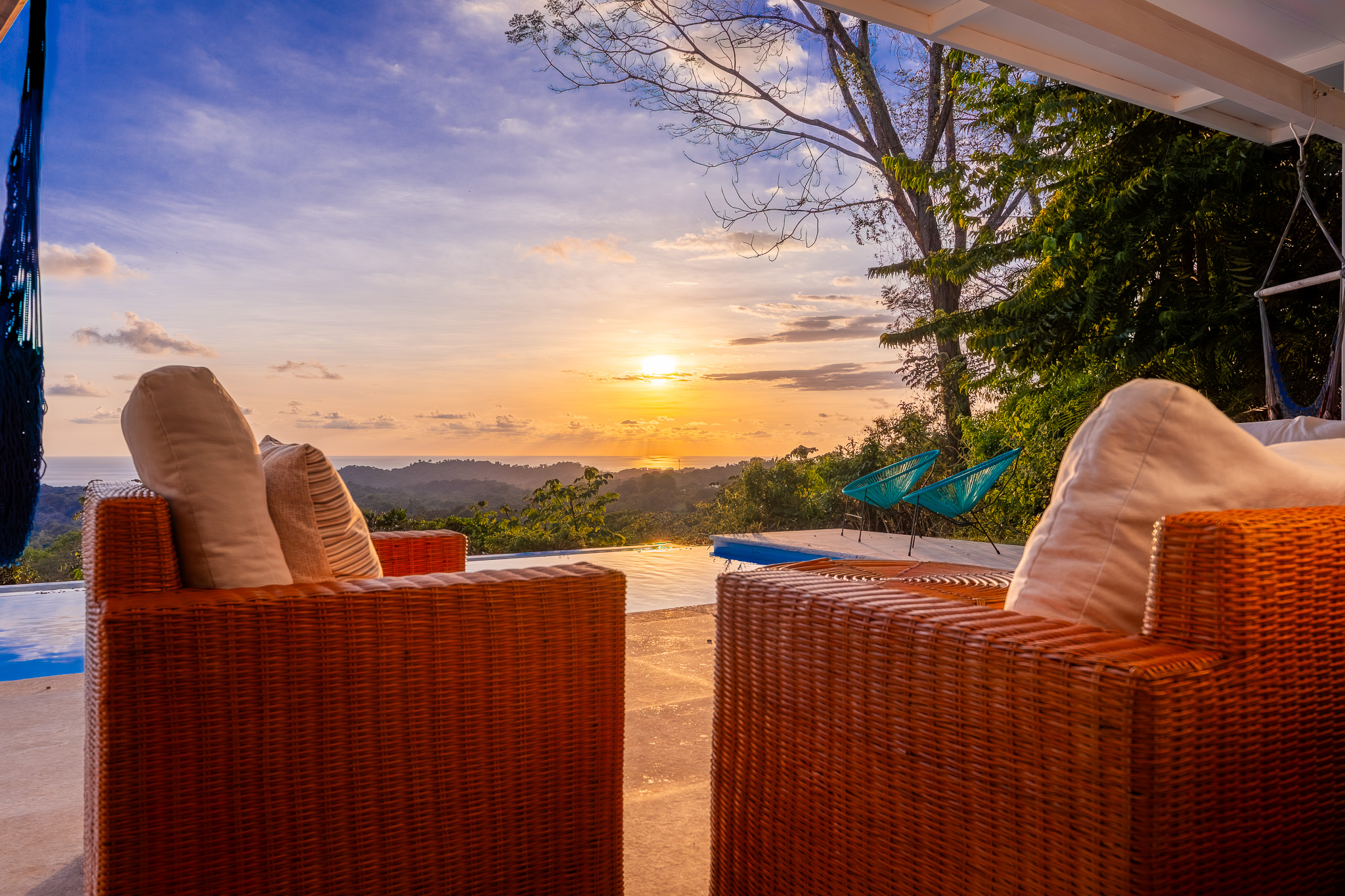
After a day exploring waterfalls, beaches, whale watching tours, restaurants, and rainforest adventures, relax in the peaceful mountain setting of Vista Bendita overlooking Costa Rica’s South Pacific coast.
Enjoy ocean views, tropical wildlife, a private pool, and easy access to some of the region’s best experiences near Ojochal and Uvita.
More Details & Local Travel Tips
We’ve created a growing collection of travel guides, local recommendations, and insider tips to help you make the most of your stay at Vista Bendita and your time exploring Costa Rica’s South Pacific coast.
Browse our blog for information on:
- Restaurants and cafes in Ojochal & Uvita
- Beaches, waterfalls, and national parks
- Whale watching, snorkeling, and outdoor adventures
- Shopping, grocery stores, and local markets
- Travel tips, driving advice, and packing recommendations
- Wellness, relaxation, and hidden local gems
Whether you’re planning your itinerary or simply looking for inspiration after you arrive, our guides are designed to help you experience the region like a local.
Explore the Vista Bendita Travel Blog
Pura Vida
Leave a Reply