
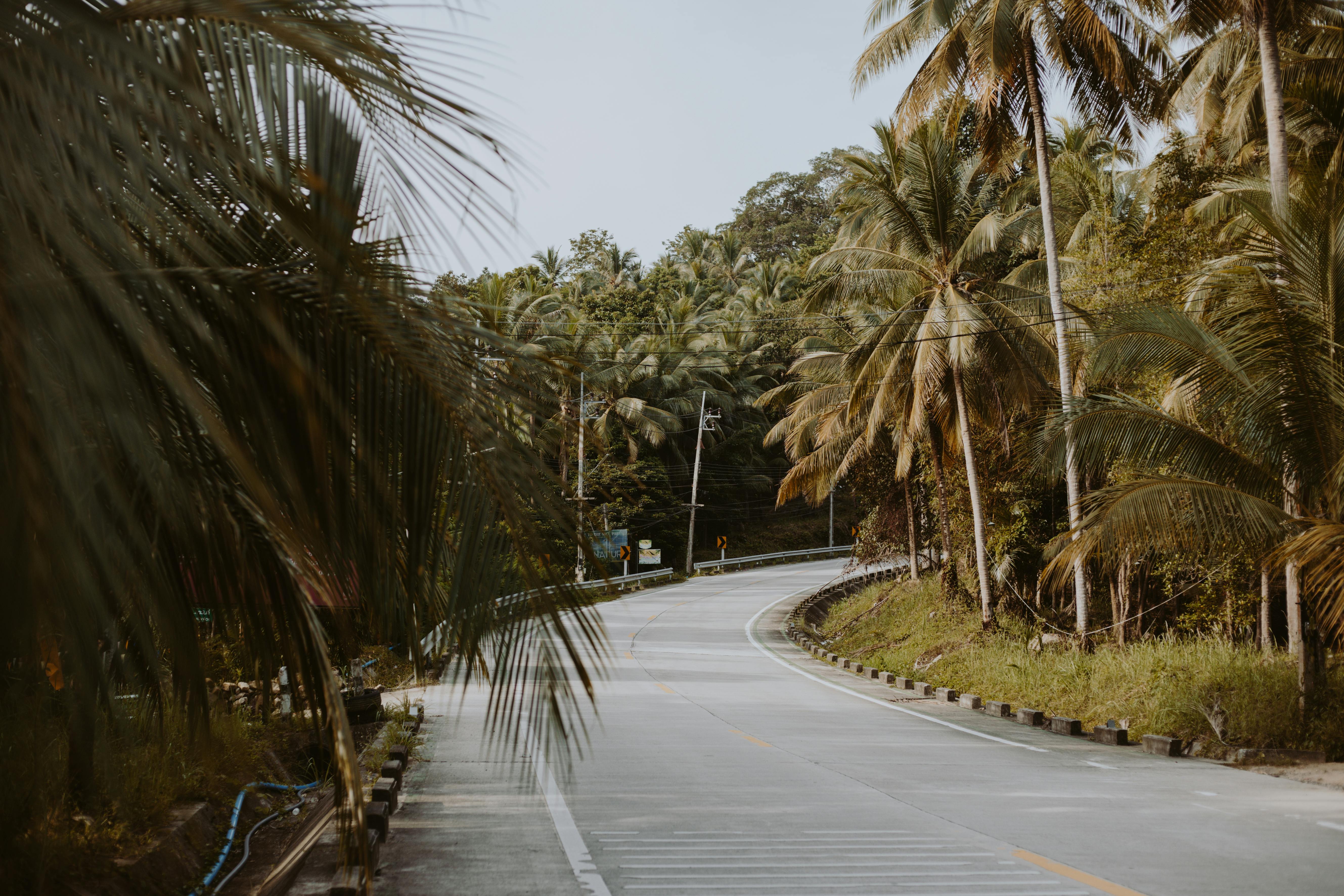
A rental car is the single best decision you can make for a trip to Ojochal and the Southern Pacific coast. It gives you the freedom to stop at a waterfall, detour to a beach you read about, leave for Caño Island at 6AM, and come back from Dominical at sunset without worrying about a taxi. But driving in Costa Rica is different from driving at home — and knowing what to expect before you leave turns a potentially stressful experience into one of the most enjoyable parts of the trip.
We’ve driven this route many times. Here’s what we’ve actually found — the good and the honest.
Your Driver’s License — What’s Required
Tourists — Your Home License Is Valid
No international driver’s license is required to drive in Costa Rica. Your valid home country driver’s license is all you need — original document, not a photocopy. Digital licenses are now accepted.
Under Costa Rica’s updated traffic law (Ley 10591, in effect 2025), your foreign driver’s license is valid for the same duration as your authorized tourist stay. For US, Canadian, and most EU citizens, that means up to 180 days — your entire visit. Keep your passport with the entry stamp accessible when driving.
What to carry at all times while driving:
- Original driver’s license — not a photocopy
- Passport with valid entry stamp — or a clear color photocopy kept in the glovebox
- Rental agreement
- Vehicle insurance documents
If your license is not in the Latin alphabet (Arabic, Chinese, Cyrillic, etc.) you must carry an International Driving Permit alongside your home license. For US, Canadian, and European licenses — no IDP required.
Minimum Age to Rent
The legal driving age in Costa Rica is 18. Most rental car companies require drivers to be at least 21–23 years old depending on the agency. Adobe Rent a Car requires a minimum of 23. Some agencies charge a young driver surcharge for drivers under 25.
What Driving in Costa Rica is Actually Like
Costa Rican drivers are moderately aggressive. Not the most aggressive we’ve encountered — but not relaxed either. Passing on hills and blind corners is common. Tailgating happens. Drivers do get frustrated and impatient, particularly on single-lane roads where trucks slow traffic, and in towns where tourists brake for everything.
Stay attentive at all times. This is the single most important piece of advice. Distractions that would be fine at home — adjusting the GPS, reaching for sunglasses — are a bigger deal here because road conditions change quickly and other drivers’ behavior is less predictable than you’re used to.
Drive defensively, not assertively. Don’t try to match local driving pace. Slow down for what you’re not sure about. Let impatient drivers past. The extra 10 minutes you lose by being cautious are not worth the alternative.
Honking is communication, not aggression. A quick horn tap often means “I’m here” or “go ahead” rather than expressing anger. Don’t take it personally — and don’t hesitate to use your horn gently in blind corners on mountain roads to signal your approach.
Navigation — Your Phone Is Your Lifeline
This is critical: road signage in Costa Rica is poor. On highways you will miss turnoffs. Town names appear late or not at all. The Ojochal turnoff on the Costanera is a good example — if you’re not watching for the hardware store (Ferretería) on the left you will drive straight past it. Don’t rely on signs to confirm your route.
Having a map is not optional — it is required.
Use Waze. It is the most accurate navigation app for Costa Rica — used nationwide, includes dirt roads, real-time police checkpoints, road conditions, and flooded crossings. Google Maps works but Waze is the local standard and the one most Costa Ricans use. Download both.
Critical: download offline maps before you leave. Cell signal drops on mountain roads — including the road to Vista Bendita. Download the offline map for the Ojochal and Uvita area in both Google Maps and Waze before you arrive. A phone with no signal and no offline maps on a mountain road at night is a genuinely unpleasant situation.
Phone mount — bring your own or buy one. Almost no rental cars in Costa Rica have a built-in digital display for your phone. This is the norm, not an exception. If you want to follow GPS turn-by-turn while driving — which you absolutely do — you need a phone mount. A cheap windshield or vent mount from any electronics store works fine. Buy one before you travel or pick one up at a mall in San José. Trying to drive and look at your phone in your hand on mountain roads is not safe and not worth it.
Landmark navigation. Costa Rica uses landmark-based directions — “200 meters past the church,” “opposite the soccer field.” GPS handles main roads well but in villages and on mountain tracks, landmarks matter. The hardware store on the Costanera for the Ojochal turn is the best example — know it before you drive.
The Road from San José to Vista Bendita
The Route
From SJO (Juan Santamaría International Airport) to Vista Bendita is approximately 230km and takes 4–5 hours under normal conditions. Allow extra time for traffic leaving San José, toll stops, and the final mountain road approach.
Route 27 west → Costanera Sur (Route 34) south → Ojochal turnoff → Vista Bendita
Stay on Route 34 south past Jacó, Quepos, Dominical, and Uvita. The Ojochal turnoff: hardware store (Ferretería) on the LEFT heading south. This is the landmark. Don’t miss it.
Realistic Drive Times from SJO
| Destination | Realistic Time | Notes |
|---|---|---|
| Jacó | 1.5–2 hrs | Good highway, toll stops |
| Quepos / Manuel Antonio | 3–3.5 hrs | Road narrows after Jacó |
| Dominical | 3.5–4 hrs | Costanera scenic stretch |
| Uvita | 4–4.5 hrs | Last reliable fuel stop |
| Ojochal / Vista Bendita | 4.5–5 hrs | Mountain road adds time |
Add 20–30 minutes for mountain roads and 45–60 minutes if leaving San José during rush hour (6:30–8:30AM or 4:30–6:30PM). GPS consistently underestimates Costa Rican mountain road times by 25–50%.
Speed Limits
Speed limits are in kilometers per hour. Quick reference: 40km/h = 25mph · 80km/h = 50mph · 100km/h = 62mph.
| Road Type | Speed Limit |
|---|---|
| Highway (Route 27, Costanera Sur) | 80–100 km/h |
| Secondary paved roads | 60–80 km/h |
| Towns and villages | 40–60 km/h |
| School zones | 25 km/h |
| Mountain unpaved roads | 20–40 km/h — use judgment |
Speed bumps (reductores) are the bigger practical concern. They appear suddenly, often completely unmarked, in the middle of highways, at every town entrance, and on roads where you least expect them. Hit one at speed and you’ll understand why everyone slows down. Watch constantly — if you see brake lights ahead for no obvious reason, a speed bump is almost always the reason.
Police enforcement: While there isn’t a heavy traffic police presence on the roads, checkpoints are common — particularly on the Costanera and Route 27. Officers check licenses, registration, insurance, and sobriety. Have your documents organized and accessible. Checkpoints are routine and professional — just have your paperwork ready and you’ll be through in two minutes.
Tolls
Route 27 from San José to the Pacific coast has 4–5 toll booths. Fees range from approximately ₡200–1,100 colones per booth (~$0.40–$2 USD each).
Payment: Colones preferred, US dollars accepted (small bills — $1, $5, $10 — change given in colones), some booths accept credit cards. Rental cars don’t have QuickPass transponders — use the cash lane (manual) or credit card lane (tarjeta).
Keep a small amount of colones in the cupholder for tolls. Once you’re south of Jacó on the Costanera heading to Ojochal, there are no more tolls. The Costanera is free to Palmar Norte.
What Vehicle Do You Need?
A 4×4 is required for Vista Bendita. Not a recommendation — a requirement. The mountain road climbs steeply on a combination of pavement and gravel. In wet conditions a standard car will not make it.
Beyond Vista Bendita, a 4×4 opens up the best beaches and waterfalls in the region — Playa Tortuga, Poza Azul, and many back road access points require clearance and grip a standard car doesn’t have.
Good options: Toyota RAV4, Mitsubishi Outlander, Suzuki Jimny, Toyota Land Cruiser Prado. Avoid anything with low ground clearance.
Dry Season vs Green Season Driving
Dry Season — December through April
The best driving conditions of the year. Roads are dry, visibility is clear, and the mountain road to Vista Bendita is straightforward. River crossings that can be impassable in rainy season are easy. Plan longer drives for dry season if your schedule allows.
Green Season — May through November
Driving is very doable but requires more attention, more time, and more caution. What changes:
Mountain roads get slippery. The road to Vista Bendita is paved but steep. In heavy rain engage 4×4 low on steep sections. Take it slowly — the gradient is real.
Afternoon rains are daily. Plan longer drives for the morning. Roads are manageable in rain but significantly slower and less pleasant after 2PM when the afternoon storms arrive.
Rivers rise fast. The Southern Pacific gets intense rainfall that feeds rivers quickly. A crossing that looks calm in the morning can be dangerous by afternoon. Never cross a flooded river — wait it out or turn back. No exceptions.
Add 30–45 minutes to any mountain route estimate in green season. Build this into your planning every day.
Ask locals. Gas station attendants and soda owners know current road conditions better than any app. Ask before heading up a mountain road after rain.
Day Driving vs Night Driving
The honest recommendation: avoid driving after dark, especially on your first trip.
Speed bumps invisible until your headlights are directly on them. Potholes. Cattle and horses on the road with no warning. Slow-moving vehicles with dim or no lights. Pedestrians walking on road shoulders. All common, all invisible at night, all genuinely dangerous.
The mountain road to Vista Bendita specifically: once you know it well it’s fine at night — it’s not a dangerous road. On your first arrival, aim to get here before dark. If you’re running late, drive very slowly on the final approach and WhatsApp us — we’ll talk you in.
Wildlife crossings at dawn and dusk. Sloths, coatis, iguanas, snakes, and occasionally larger animals cross mountain roads. Wonderful in daylight. A hazard at speed in the dark.
If you must drive at night: Use high beams on empty roads, reduce speed significantly, treat every blind corner as though something is around it. The Costanera is relatively safe at night — mountain roads much less so.
Fuel
All gas stations in Costa Rica are full service — an attendant pumps for you. Tip ₡500–1,000 colones (~$1) is appreciated but not required.
Fill up in Uvita before turning off the Costanera for Ojochal. There’s a station in Ojochal village but hours are limited and it may be closed. Don’t count on it. Uvita is your reliable last stop.
Fuel types: Regular (gasolina regular), Super (gasolina súper), Diesel. Most 4×4 rentals take Super or Diesel — confirm with your rental agency. Pay in colones when possible — dollar prices at stations use an unfavorable exchange rate.
Traffic Laws — Key Differences from Home
Driving side: Right side of the road — same as US, Canada, and most of Europe.
Seatbelts: Mandatory for all occupants.
Child seats: Required for children under 12 or under 145cm. Confirm availability with your rental agency in advance.
Mobile phones: Illegal to use handheld while driving. Use a mount — see the navigation section above.
Alcohol limit: 0.75 grams per liter — lower than the US (0.8g) and many European countries. Checkpoints include sobriety checks, particularly on holiday weekends. Zero tolerance is the practical standard.
Headlights: Required on all highways at all times, day and night — this is law.
Police checkpoints: Common on main highways including the Costanera and Route 27. Routine document checks — license, passport entry stamp, rental agreement, insurance. Have everything organized and ready. Professional and quick if your paperwork is in order.
If pulled over or fined: Stay calm, present documents, insist on a formal written ticket (boleta) for any fine. Never pay cash directly to an officer.
Insurance — The Honest Version
All rentals include mandatory Third Party Liability (TPL) by law. Beyond that:
Collision Damage Waiver (CDW): Optional but recommended. Covers damage to your rental. Usually comes with a $1,000+ deductible.
Credit card coverage: Many premium cards (Chase Sapphire, Amex Platinum) offer CDW. Bring printed proof of benefits — Costa Rican rental companies require it before waiving CDW. Note that buying the rental company’s CDW may void your card’s coverage. Read both before deciding.
Before you leave the lot: Photograph the entire vehicle — every panel, every wheel, every existing scratch — and send to yourself with a timestamp. This protects you from disputed damage claims on return.
River crossings: No rental insurance covers river crossing damage. Standard across all agencies. The water crossing near Playa Tortuga on the road to Vista Bendita is passable in normal conditions — if it looks questionable, park and walk.
Recommended Rental Companies
Adobe Rent a Car — Our recommendation. Competitive rates, reliable 4×4 vehicles, straightforward to deal with. Available at SJO. Check MyTanFeet for affiliate pricing.
Vamos Rent-A-Car — Will deliver directly to Vista Bendita. Useful if you prefer to take a private transfer from the airport and have your car waiting at the property when you arrive.
Major international brands (Alamo, Hertz, Budget, Avis) all available at SJO. Book 4×4 vehicles well in advance — they sell out quickly December through April.
Quick Reference — Road to Vista Bendita
| Checkpoint | What to Know |
|---|---|
| Before you leave SJO | Photograph vehicle, load offline maps, confirm phone mount in place |
| Route 27 tolls | 4–5 booths, ~$1–2 each, keep colones in cupholder |
| Tarcoles Bridge (~1hr) | Stop for crocodiles — worth it every time |
| Jacó (~1.5hrs) | Good fuel, food, ATM stop |
| Uvita (~4hrs) | Last reliable fuel before Ojochal — fill up here |
| Ojochal turnoff | Hardware store (Ferretería) on LEFT heading south — easy to miss |
| Mountain road to Vista Bendita | Steep, gravel sections — 4×4, slow down, arrive before dark on first visit |
| Vista Bendita gate | Keypad code in check-in instructions. WhatsApp us if any trouble. |
Questions about the drive? Leave a comment or WhatsApp us before you leave San José — we’re happy to talk through the route.
Stay at Vista Bendita
After a day exploring waterfalls, beaches, whale watching tours, restaurants, and rainforest adventures, relax in the peaceful mountain setting of Vista Bendita overlooking Costa Rica’s South Pacific coast.
Enjoy ocean views, tropical wildlife, a private pool, and easy access to some of the region’s best experiences near Ojochal and Uvita.
More Details & Local Travel Tips
We’ve created a growing collection of travel guides, local recommendations, and insider tips to help you make the most of your stay at Vista Bendita and your time exploring Costa Rica’s South Pacific coast.
Browse our blog for information on:
- Restaurants and cafes in Ojochal & Uvita
- Beaches, waterfalls, and national parks
- Whale watching, snorkeling, and outdoor adventures
- Shopping, grocery stores, and local markets
- Travel tips, driving advice, and packing recommendations
- Wellness, relaxation, and hidden local gems
Whether you’re planning your itinerary or simply looking for inspiration after you arrive, our guides are designed to help you experience the region like a local.
Explore the Vista Bendita Travel Blog
Leave a Reply