
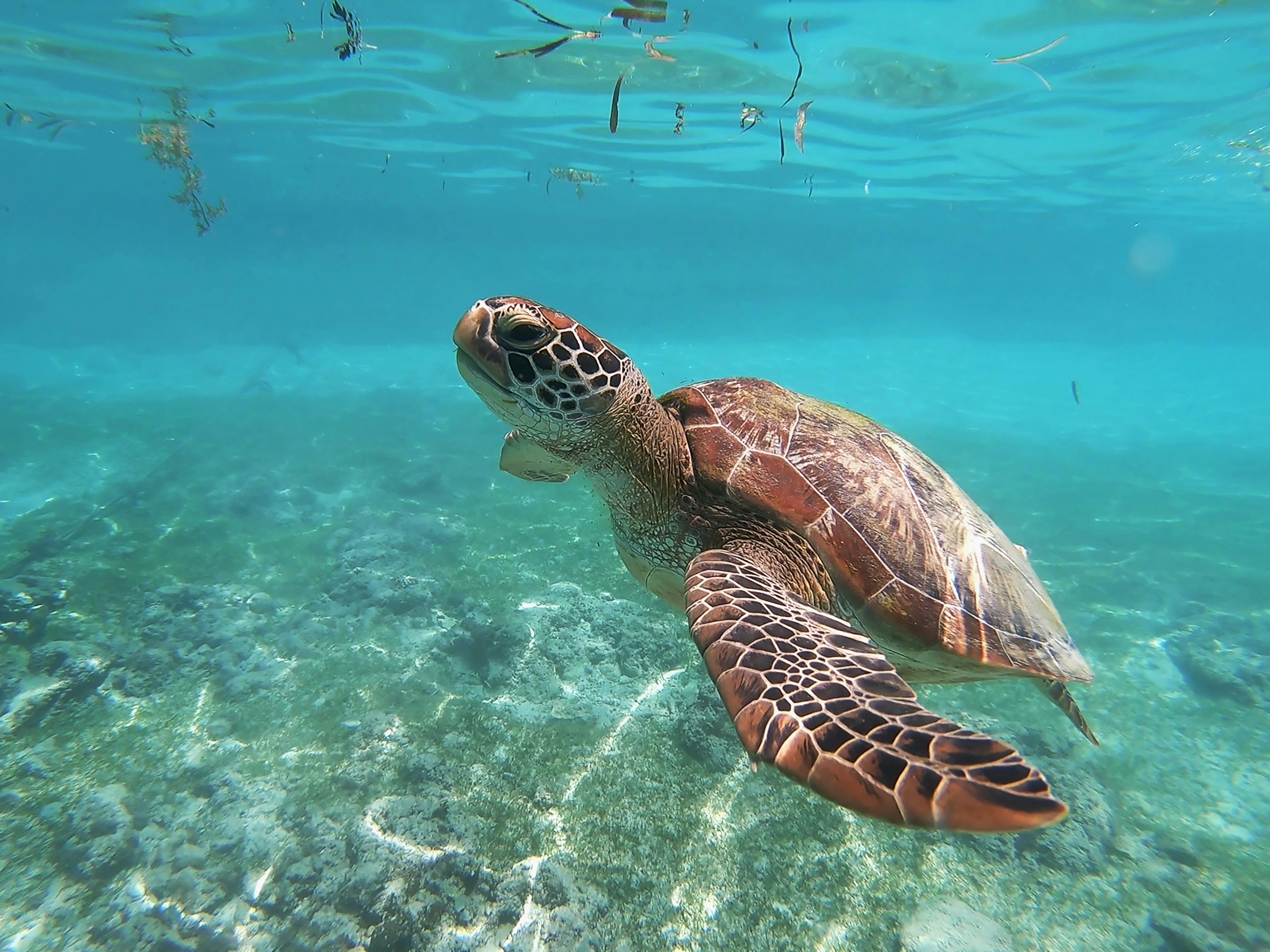
Ten minutes from Vista Bendita, one of the most meaningful wildlife conservation programs in Costa Rica operates quietly on a jungle-backed beach. Reserva Playa Tortuga is a non-profit biological research and education center established in 2009 by community members and Costa Rican scientists, focused on environmental conservation in the Terraba-Sierpe basin.
Since 2009, the reserve has released more than 50,000 baby turtles and protected an average of 100 nests per season. This is not a tourist attraction with a gift shop. It’s a working research station where scientists, volunteers, and interns conduct real conservation work — and where guests from Vista Bendita can participate in a way that is genuinely moving.
If you are here between July and December, this is one of the most important things you can do with a day.
The Turtles
Four Species — All Endangered
Four species of sea turtle have been recorded nesting at Playa Tortuga: Olive Ridley, Green, Leatherback, and Hawksbill. All four are in danger of extinction.
Olive Ridley (Lepidochelys olivacea) — The primary nesting species at Playa Tortuga. An average of 40 adult Olive Ridley females arrive to nest each year, each laying an average of 98 eggs per nest. On average, around 4,000 baby turtles are released each season.
Green Turtle (Chelonia mydas) — Less frequent than the Olive Ridley but confirmed nesters at Playa Tortuga. In 2023, the reserve released 74 green turtles at Playa Hermosa, closing out the season.
Leatherback (Dermochelys coriacea) — The largest sea turtle on earth, reaching up to 2 meters and 900kg. Occasional nester at Playa Tortuga. A leatherback nesting encounter is extraordinarily rare and unforgettable.
Hawksbill (Eretmochelys imbricata) — Critically endangered globally. Occasional nester. Recognized by the distinctive pointed beak. An encounter is exceptional.
The Nesting Season
When to Visit
The nesting period extends from July to December, with the peak of nesting in September and October. During peak season it is possible to observe an individual turtle nesting every other night, sometimes up to two or three at a time.
The best time to see baby turtles is after September when the first hatchlings emerge. Some public turtle releases are held throughout the season.
| Month | What’s Happening | Recommended For |
| July | Nesting season begins, first nests arriving | Early season visit, fewer crowds |
| August | Nesting increasing, first hatchlings possible | Beach patrols begin August 1st |
| September | Peak nesting ⭐ | Best month overall — nesting + hatchlings |
| October | Peak nesting continues ⭐ | Best month overall — nesting + hatchlings |
| November | Nesting winding down, hatchlings releasing | Beach patrols through November 30th |
| December | Season ends | Final hatchling releases |
The Reserve — What’s Here
Sea Turtle Conservation Program
The centerpiece of the reserve’s work. Due to an inherent poaching threat, most nests are moved to the reserve’s protected nursery and hatchery where staff and volunteers monitor the area 24 hours a day. In the hatchery, important data about the biology of the turtles’ nests is gathered — incubation period, nest temperature and how this influences the sex of hatchlings, as well as environmental factors like precipitation. Osatravels
Watching hatchlings emerge from a nest and make their first journey to the ocean is one of the most extraordinary wildlife experiences available anywhere in Costa Rica. It happens right here, 10 minutes from Vista Bendita.
Butterfly Garden Project
A functioning butterfly garden on site, used for education about the life cycle of insects and their ecological role in the rainforest ecosystem. Open to visitors and a good activity for families with children outside nesting season.
Crocodilian Monitoring Project
The main objective is to collect real-time information about crocodilians at the reserve — their distribution, relationship with the environment, and human impact on the ecosystem. The estuary behind Playa Tortuga is active crocodile habitat — the reserve monitors and studies this population year-round.
Mammal Inventory Project
Mammals are important for forest dynamic balance — by getting data on their behavior, diet, and local movements, the reserve provides information that can be used in reforestation plans to establish biological corridors. Camera traps throughout the reserve have documented pumas, ocelots, white-nosed coatis, and multiple monkey species.
Bird Monitoring Project
Bird observations are made throughout the reserve and surrounding Ojochal area to maintain an updated list of species that inhabit or frequent the area. The reserve’s bird list overlaps significantly with Vista Bendita’s own list — scarlet macaws, herons, egrets, kingfishers, and toucans are all regularly recorded.
Public Hatchling Releases — Best Option for Casual Visitors
Public turtle releases are held throughout the season when hatchlings are ready to emerge. All ages are welcome to join public releases. This is the most emotional and accessible experience the reserve offers — watching dozens of tiny turtles make their way across the sand to the ocean for the first time is something children and adults remember for the rest of their lives.
How to find out about upcoming releases: Follow Reserva Playa Tortuga on Facebook — they post announcements for public releases as they happen. This is the most reliable way to time a visit. Releases aren’t predictable far in advance — they depend on when nests hatch.
Beach Patrols — Join the Night Work
It is possible to join the reserve’s patrol team every night from August 1st through November 30th. Minimum age is 10 years old, and children must be accompanied by a responsible adult. Call +506 2786-5200 to arrange.
Night patrols involve walking the beach in the dark, watching for nesting females, and assisting the research team with data collection. A female Olive Ridley coming up the beach to lay her eggs — moving silently in the darkness, exhausted from the ocean — is one of the most profound wildlife encounters in Costa Rica.
What to bring for a night patrol: Dark clothing (no white, no bright colors — turtles are sensitive to light), no flashlights with white light (red lights only), closed shoes, insect repellent, and patience. The reserve will guide everything else.
Day Visits
The reserve operates Monday through Saturday 9AM–3PM. A visit during the day allows guests to see the hatchery, learn about the conservation program from staff, and visit the butterfly garden. Not as dramatic as a night patrol or hatchling release but genuinely educational and well worth the 10-minute drive from Vista Bendita.
Contact: +506 2786-5200 · reservaplayatortuga.org
How to Get Involved Further
Volunteer Program
Volunteers assist the project biologist with turtle data collection, monitoring and tagging, and management including hatchling releases. Work includes relocation of eggs to the hatchery when threatened by beach erosion, tides, driftwood, or poachers. Night patrols for turtles and poachers are core volunteer duties.
Beyond sea turtles, volunteers can participate in crocodile monitoring and research, mammal surveys and camera trap setting, tree boa studies, environmental education, and butterfly garden projects — all year round.
Volunteers receive a full day’s training covering nesting sea turtle biology, the difference between species, and what to look for in their behavior.
Minimum age for volunteering: 18 years old · Minimum commitment: Typically 2 weeks · Apply at: reservaplayatortuga.org/volunteer
The testimonials from past volunteers are extraordinary — people who came for two weeks and stayed two months. This is a place that changes how you see the world.
Internship Program
For students and researchers — formal internship placements with scientific research responsibilities. The reserve provides opportunities to scientists in Costa Rica and abroad to further develop their research skills. Full details at reservaplayatortuga.org/internship.
Donate
The reserve operates on donations and volunteer fees. Every dollar directly funds turtle protection, hatchery maintenance, and research programs. The reserve has released more than 50,000 baby turtles since 2009 — that number grows with every donation. Donate at reservaplayatortuga.org/donate.
Practical Notes
Getting there: 10 minutes from Vista Bendita heading south on the Costanera. The turnoff for Playa Tortuga is just after the Río Balso bridge heading south — take the immediate first right after the bridge and follow the dirt road to the reserve. A 4×4 is recommended, especially in green season.
What to wear for a day visit: Light clothing, closed shoes, hat, sunscreen, insect repellent. The beach is in direct sun.
What to wear for a night patrol: Dark clothing only. No white. No bright colors. Turtles are disturbed by light and movement. Red-filtered flashlights only — the reserve can provide these.
Photography: No flash photography near nesting turtles or hatchlings. Ever. The reserve will explain the rules on arrival — take them seriously.
Supporting the reserve: Beyond visiting, buying a t-shirt or making a small donation at the reserve directly funds their work. The reserve operates on a shoestring and does extraordinary things with it.
A Note From Vista Bendita
Reserva Playa Tortuga is one of the reasons we feel genuinely fortunate to have this property where it is. The conservation work happening 10 minutes from our door — protecting species that have navigated these oceans for over 100 million years — puts everything else in perspective.
If you visit during turtle season, go. Take the kids. Join a night patrol. Watch a hatchling find the ocean for the first time. It is one of those experiences that stays with you.
Follow them on Facebook for hatchling release announcements during your stay: facebook.com/reservaplayatortuga
Quick Reference
| Experience | Season | Age | Cost | Contact |
| Public hatchling releases | July–December | All ages | Free/donation | Facebook announcements |
| Night beach patrols | Aug 1 – Nov 30 | 10+ (with adult) | Small fee | +506 2786-5200 |
| Day visits / hatchery | Year-round | All ages | Small fee | +506 2786-5200 |
| Volunteer program | Year-round | 18+ | Program fee | reservaplayatortuga.org |
| Internship program | Year-round | University level | Program fee | reservaplayatortuga.org |
Follow Reserva Playa Tortuga on Facebook to stay updated on public releases during your stay.
Stay at Vista Bendita
After a day exploring waterfalls, beaches, whale watching tours, restaurants, and rainforest adventures, relax in the peaceful mountain setting of Vista Bendita overlooking Costa Rica’s South Pacific coast.
Enjoy ocean views, tropical wildlife, a private pool, and easy access to some of the region’s best experiences near Ojochal and Uvita.
More Details & Local Travel Tips
We’ve created a growing collection of travel guides, local recommendations, and insider tips to help you make the most of your stay at Vista Bendita and your time exploring Costa Rica’s South Pacific coast.
Browse our blog for information on:
- Restaurants and cafes in Ojochal & Uvita
- Beaches, waterfalls, and national parks
- Whale watching, snorkeling, and outdoor adventures
- Shopping, grocery stores, and local markets
- Travel tips, driving advice, and packing recommendations
- Wellness, relaxation, and hidden local gems
Whether you’re planning your itinerary or simply looking for inspiration after you arrive, our guides are designed to help you experience the region like a local.
Explore the Vista Bendita Travel Blog
Leave a Reply